Junior Arts & Management Skills
Teenagers don't just attend events — they run them.
We allow a cohort of 13 to 17-year-olds a real budget, a real venue and a real deadline, and teach them to run a live music event as a business. Sixteen weeks later they have sold the tickets, paid the costs and stood at the back of a room they filled.
Where it started
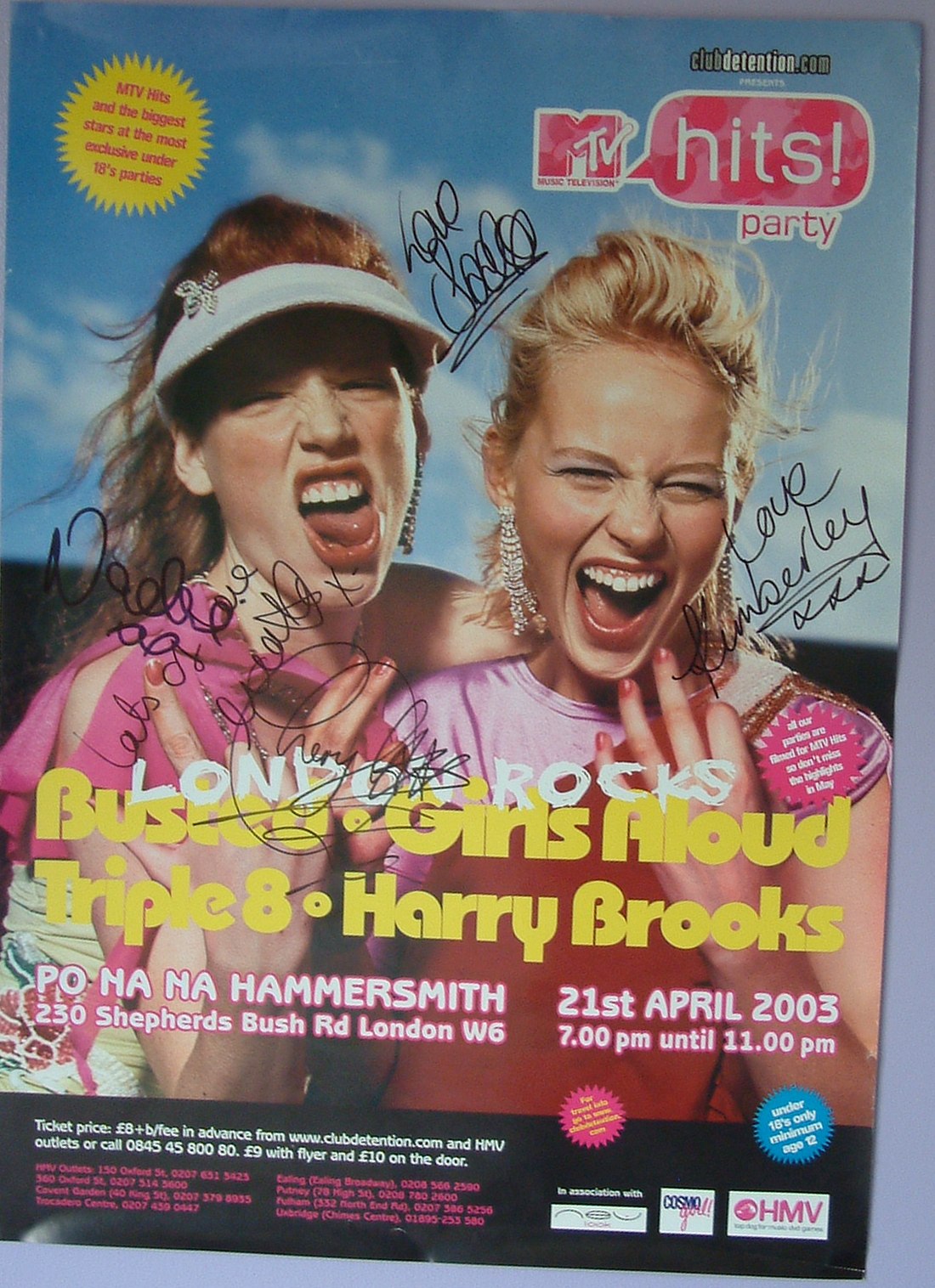
Under-18s only. Minimum age twelve. Filmed for MTV.
Before Marmalade JAMS existed, our founder was putting on nights like this one — the MTV Hits parties, and the Dance2k events that became D2K. Thousands of teenagers a year, in real venues, on real bills, at an age when nowhere else would have them. This flyer came back from the night signed.
- Night
- MTV Hits party — “London Rocks”
- Bill
- Busted, Girls Aloud, Triple 8, Harry Brooks
- Venue
- Po Na Na Hammersmith, 230 Shepherds Bush Road, London W6
- Date
- 21 April 2003, 7pm until 11pm
- Door policy
- Under-18s only, minimum age 12. No alcohol.
- Signed
- Signed by the performing artists, including Cheryl Tweedy — now simply Cheryl
And then the programme itself

How it works
Sixteen weeks. Three departments. One night that has to work.
Students are recruited by application and interview, not referral. They are split into departments and given the jobs that actually exist in event production — then the deadline does the teaching.
“This isn't about the event. It's about learning how to create an event. The event is their exam.”
The event has to make money, and the young people have to be the ones who make it. That is not a funding strategy dressed up as teaching — it is the single most useful thing a teenager can take away: that revenue minus cost is either a number you chose or a number that happened to you.
- Ages
- 13 to 17
- Cohort size
- 15 to 25 students, across three departments
- Shape
- Sixteen workshops of one to two hours, after school and at weekends
- Delivery
- One school taking all three departments, or three partner schools taking one each plus a shared weekend session
- The event
- A live ticketed music night, designed for 500+ attendees
- Cost to the school
- None
Who came through it
Two people, saying the same thing.
“Marmalade JAMS has transformed the way our students see their own potential. It's real, it's fun, and it gives them genuine responsibility.”
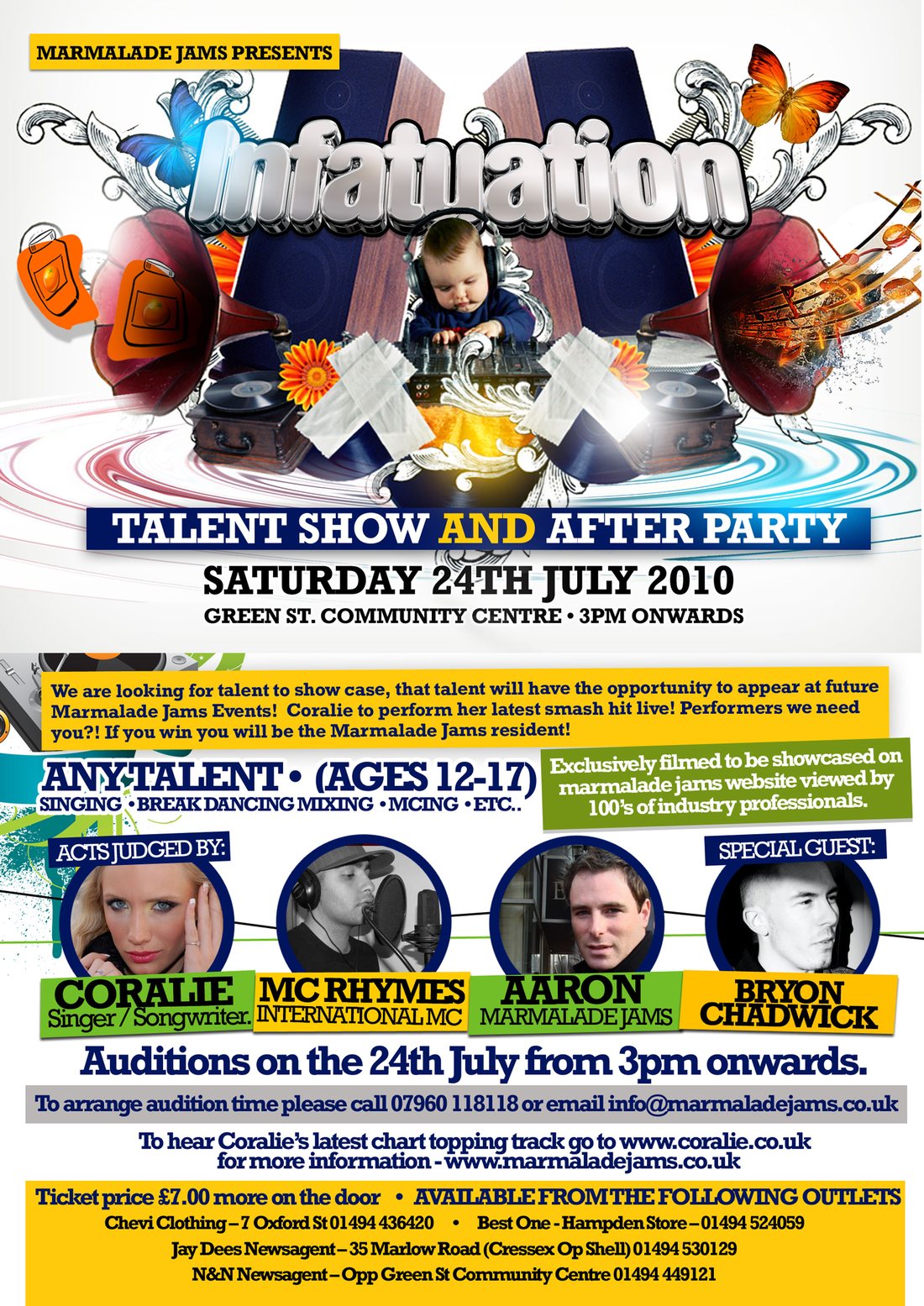
Anthony Moubarak Then Head of Year at Cressex Community College, where the 2010 pilot ran. He brought the programme into the school and judged the students' showcase himself. At fifteen, his own first performances had been on our founder's under-18s stages. He still performs as Rhymestar.
“It was at a time where I could have easily been mixed up in the wrong crowd and gone off the rails. Working with Aaron and the boys I had a purpose… I learnt life skills, money management, and how to be successful.”
Michael Garner Written in 2012. He was a ‘hustler’, although disengaged from school when he joined — which is not the exception to who this programme is for, it is exactly who it is for. He is now a property developer.
Why we are starting it again
“I remember when I was growing up, there was an under 18s event in Beaconsfield called Dance 2K. I used to DJ there a lot. I was probably 14 at the time. That was where I first started DJing.”
“It is a shame there is nothing like Dance 2K now. It is kind of like Wycombe is a big place but it has got no music scene at all.”
Kye Gibbon One half of Gorgon City, who have played Glastonbury and Radio 1’s Big Weekend and taken three singles into the UK top twenty. He started at fourteen, DJing at the Dance2k nights in Beaconsfield — the events that became D2K.
Speaking to the Bucks Free Press
Two names, one operation
D2K is the night. Marmalade JAMS is the programme behind it.
D2K has been running under-18s nights since the early 2000s, when it was Dance2k. It is the name young people know and the door most of them come through. Marmalade JAMS is what happens when some of them decide they would rather run the night than queue for it. Visit d2k.rocks ↗
Where to go next
Pick the door that fits.
Schools
What we need from you, what we bring, how the sixteen weeks sit alongside the timetable, and the full safeguarding position.
For heads, careers and pastoral leads →Partners
What a brand gets that isn't a logo on a banner, what we ask for beyond money, and an honest account of what you would be buying into at this stage.
For corporate and community partners →Young people
Start at a D2K night. That is where cohorts get recruited from, and where you find out whether running one appeals more than going to one.
Go to d2k.rocks ↗Straight answers
Where we actually are, in September 2026.
Being visibly mid-relaunch is not a weakness. Pretending to be mid-delivery when we are not would be.
No cohort running today
The curriculum, the safeguarding, the evaluation framework and the school materials are all built and in use. What we do not yet have is a 2026 cohort, and we are not going to imply otherwise.
No impact percentages
Figures circulated in earlier versions of our materials that were never formally gathered. We have withdrawn them. Our evaluation architecture is real — minuted workshops, weekly written feedback to the school, a mid-programme review and a structured debrief — and the first relaunch cohort produces the first dataset we will stand behind.